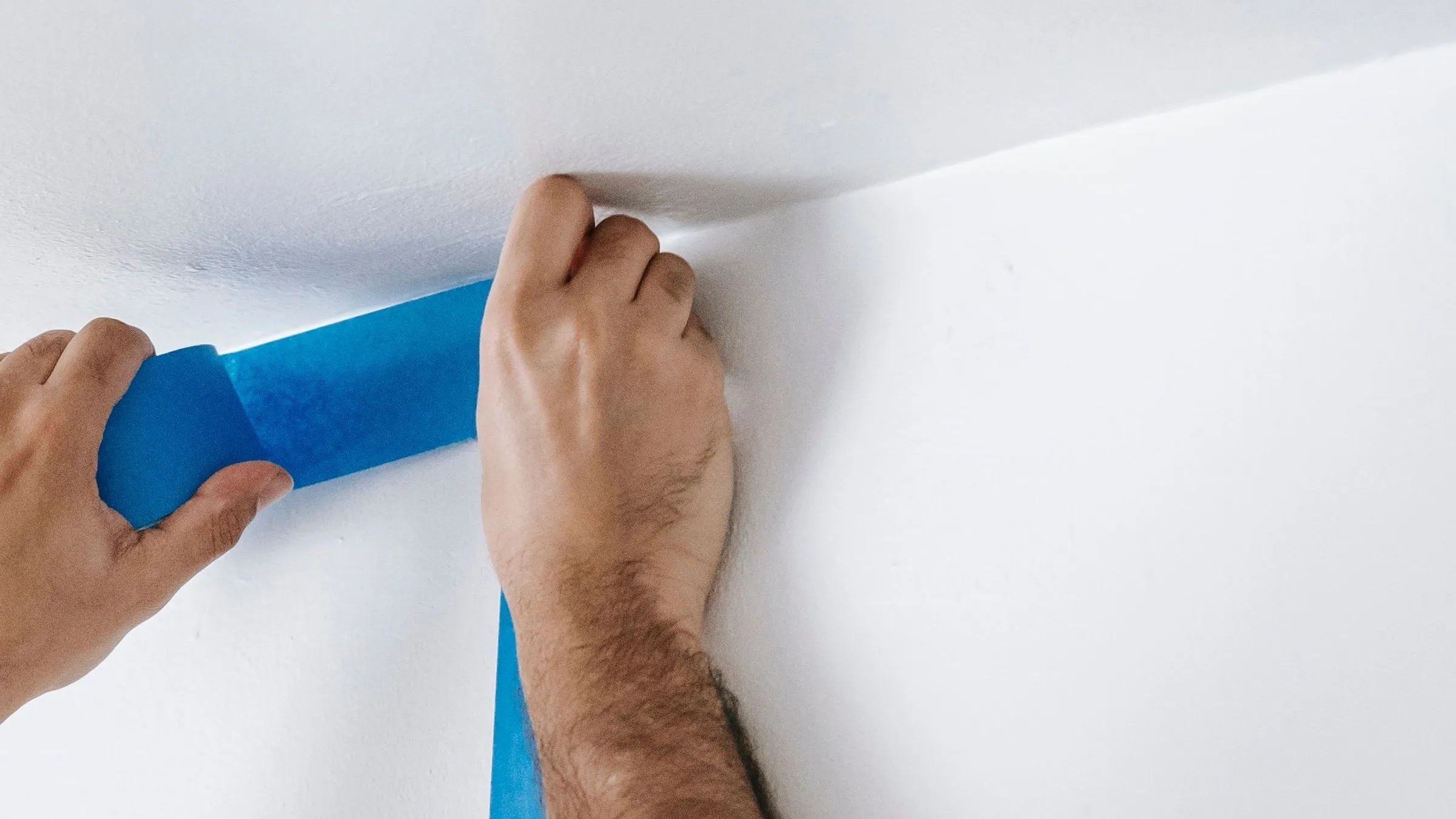
Most of what makes an interior paint job look good happens before the first coat goes on. Painters handle the technical prep — patching, sanding, caulking, masking and covering floors — but a little work on your side makes the job faster, cleaner and less disruptive for your household.
Start with the small stuff. Take down pictures, mirrors, clocks and curtains, and put away anything breakable or valuable on shelves and tables. Leave the nails and anchors in the wall if you plan to hang things in the same place; tell us, and we'll paint around them instead of patching them.
Next, the furniture. Move what you can out of the room, or at least toward the center, so there's a clear three-foot path along every wall being painted. Heavy pieces like beds, dressers and sofas can stay in the middle of the room; we cover them with plastic and drop cloths before we start.
Pick your colors early and try them on the wall. Paint chips look different under your own lighting, so put up a couple of sample swatches and look at them in the morning and the evening. Decide on the sheen too: flat or matte for ceilings, eggshell or satin for walls, and semi-gloss for trim and doors that get touched and cleaned.
Plan around the work. Keep kids and pets out of the rooms being painted, open windows or run a fan for airflow, and expect a few hours between coats. Modern low-odor paints make it easy to keep living in the house while we work, one room or one floor at a time.
On the day, we protect floors and furniture, repair small cracks and nail holes, sand and prime where needed, and clean up when we're done. Want a free estimate for your rooms? Call Summit Home Solutions at (510) 518-9937.